

What Is Nano Infusion? Benefits, Uses & Skin Care Guide
September 18, 2026
A sound healer is a trained practitioner who uses tools like crystal singing bowls and vibroacoustic tables to guide deep relaxation. The aim is to help your body step out of stress mode and into a calmer, restful state.
Plenty of people type what a sound healer is into a search bar after a rough month, usually hoping for something gentler than another coffee. This guide covers what a sound healer does, how sessions feel, and what to check before you book.
What Is a Sound Healer?
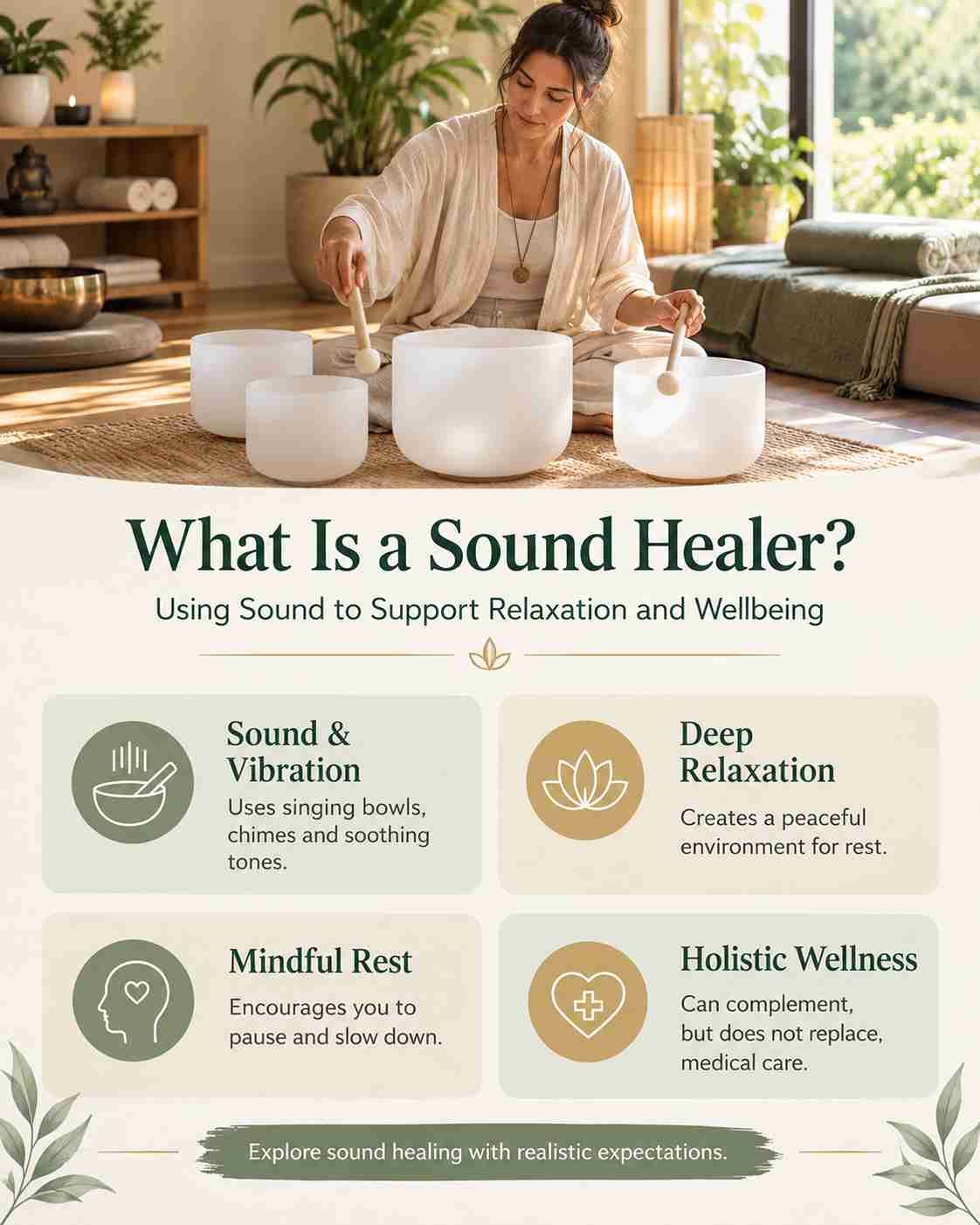
A sound healer uses tone and vibration to help you relax deeply. Sessions may include singing bowls, chimes, and specialized tables. It is a wellness practice rather than a medical treatment, and it works best alongside regular healthcare.
You will also hear people ask what a sound therapist is. The terms overlap, but a sound therapist often points to someone with formal music therapy or clinical training, while a sound healer usually works in a wellness setting.
Using sound to calm the body is not new. Many cultures have used chanting, drums, and bowls for rest and ritual for centuries. A typical practitioner will:
- Ask how you feel and what you want from the session
- Choose instruments that suit your needs
- Play slowly so you can rest instead of think
- Explain aftercare before you leave
Sound Healing Practices You Will Come Across
Common sound healing practices include group sound baths, crystal bowl sessions, Tibetan bowls and chimes, and vibroacoustic therapy, where music turns into gentle vibration you feel through a table. Some sessions add Reiki.
- Sound bath: you lie down while bowls and chimes play, and you simply listen.
- Crystal singing bowls: quartz bowls that make long, steady tones.
- Tibetan bowls and chimes: warmer, layered sounds that add variety.
- Vibroacoustic therapy: low-frequency sound, roughly 10 to 1200 Hz, travels through transducers so you feel it in your body.
- Voice analysis: software reads the frequencies in your voice and gives the practitioner a starting point.
A liquid vibroacoustic table carries vibration through water, which many guests describe as floating in sound.
Why Your Nervous System Needs a Break?
Your nervous system has a stress mode that speeds up your heart and tightens your muscles, and a rest mode that slows breathing and helps you recover. Constant pressure can keep you stuck in the first one.
Signs you may be running on stress for too long:
- Trouble falling or staying asleep
- A tight neck, jaw, or shoulders
- A mind that will not slow down
- Feeling wired but tired
Your nervous system doesn’t bounce back overnight. It settles when it keeps getting the message that things are safe, through quiet, warmth, slow breaths, and rest. A soft, steady tone can help.
How a Sound Bath for Nervous System Recovery Works
A sound bath for nervous system support works by giving your mind one simple thing to follow. Long, fading tones from bowls and chimes remove sudden changes, so your breathing slows on its own while you lie still. On a vibroacoustic table, you feel the sound through your body. People often ask about a nervous system healing frequency, but no single frequency has been proven to heal. Solfeggio tones are popular, and many guests enjoy them, yet research is still limited. Treat it as support for relaxation, not a cure.
Sound Therapy for Stress, Anxiety, and Pain
The majority of people use sound therapy for relaxation, anxiety, sleep, and tension in the body. Research on vibroacoustic therapy shows promise, but results vary, so treat it as support rather than a replacement for medical care.
Stress: Sound therapy stress relief is the most common reason people book. The slow pace gives you permission to do nothing, which is harder than it sounds. If you are curious about sound therapy for stress, one session is a fair way to see how your body responds.
Anxiety: Sound therapy for anxiety appeals to many people because it is passive. You do not need to meditate well or clear your mind. Some also explore sound therapy for anxiety and depression as a calming habit alongside counseling or medical care, never instead of it. If worry or low mood feels heavy, speak with a licensed professional first.
Pain: Sound therapy for pain deserves the most careful wording. Vibroacoustic studies have looked at back pain, headaches, and fibromyalgia with some positive findings, but it is not a cure and should not replace a diagnosis.
What Happens in a Session?
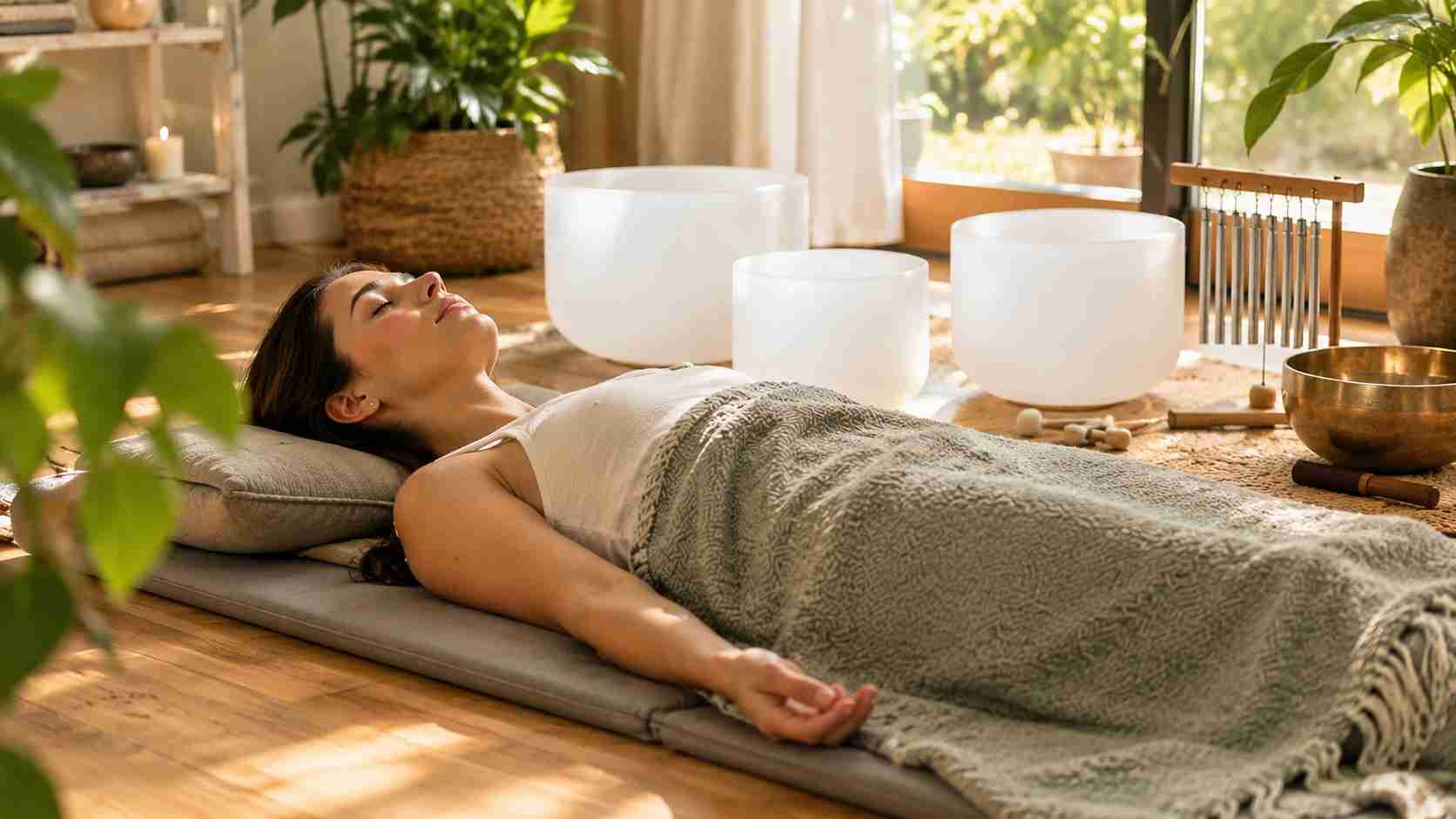
A session usually starts with a short chat, then you rest on a table or mat while the practitioner plays bowls or music. You stay clothed, lie back, and listen. Most people are calm and a little sleepy.
The flow is simple:
- A short talk about how you feel and any health concerns
- Voice analysis, if the practice offers it
- Time on the vibroacoustic table or mat
- Live bowls and chimes
- A few quiet minutes afterward
Wear comfortable clothes, drink water before and after, and avoid planning anything demanding right afterward. Some people feel emotional or very sleepy, which is common. Let it pass.
How to Choose a Sound Healer You Can Trust?
Pick someone who is upfront about their training, explains what the session involves, and never promises a cure. You should feel free to ask questions, and they should ask about your health before they start.
Not every practitioner works the same way, so a short conversation before booking tells you a lot. Here is what to ask:
- Where did you train, and how long have you been doing this?
- What instruments will you use during my session?
- Is this okay for me if I’m pregnant, have an implanted device, or live with a health condition?
- How might I feel afterward?
A good healer answers plainly and doesn’t get defensive. If someone dodges your questions or talks about curing illness, take that as a sign to look elsewhere.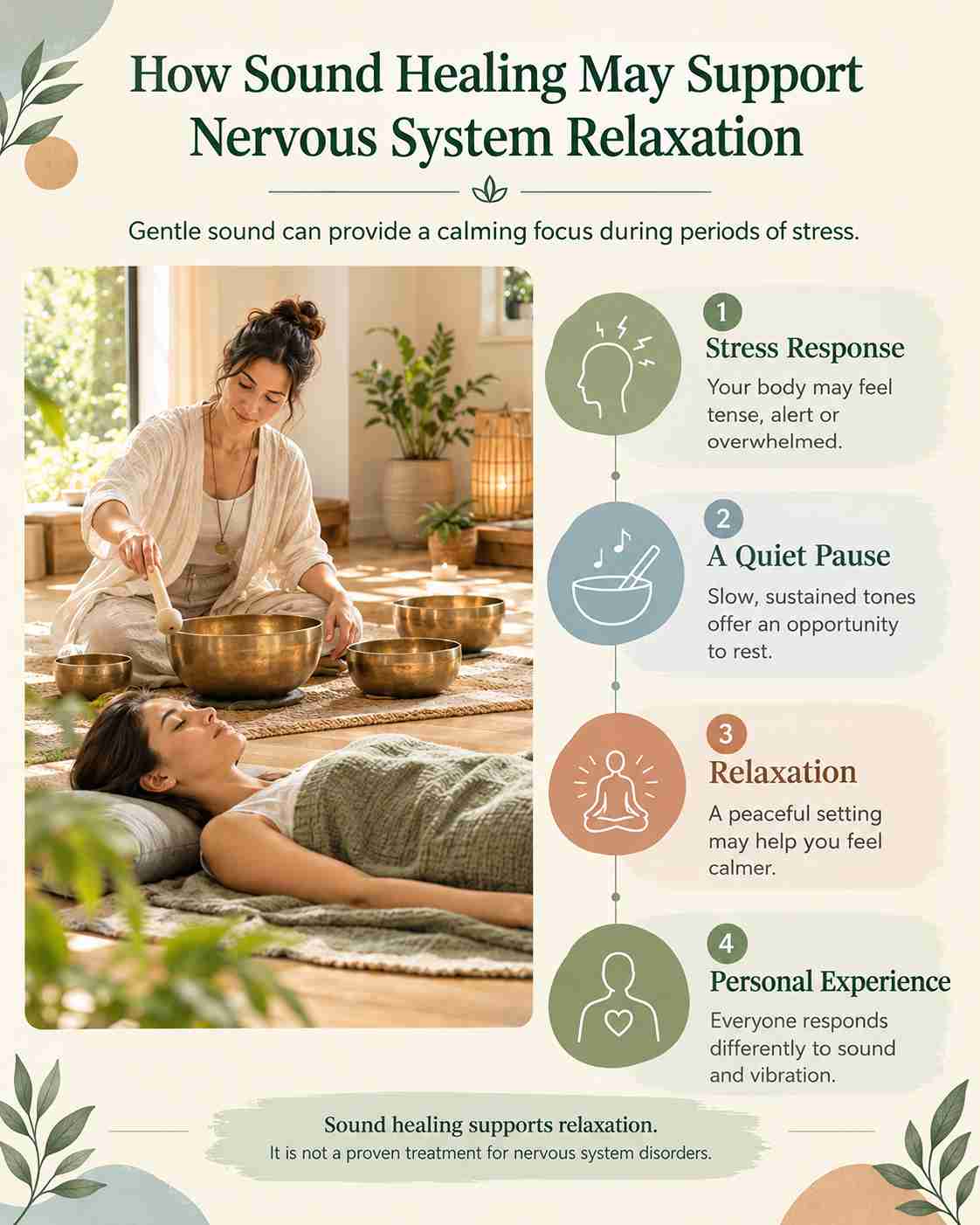
Sound Healing at Au Naturale Spa & Wellness in Clermont, FL
Au Naturale Spa & Wellness offers private and group sound healing in Clermont, Florida, using crystal singing bowls, Tibetan bowls, and a liquid vibroacoustic table, often combined with Holy Fire Reiki.
Every session starts with a Voice Analysis Harmony assessment, which maps the frequencies in your voice. Next comes the vibroacoustic table, followed by a crystal bowl sound bath. The sound healing here is built around rest first, with no pressure to feel anything specific.
Current options:
- 30-minute voice analysis and frequency massage: $88
- 60-minute version: $111
- Crystal Singing Bowl Sound Healing, 60 minutes: $135
- Holy Fire Reiki Sound Healing: $155 for 60 minutes or $189 for 90 minutes
- Group Awakening Wellness class: $35 for 60 minutes
If you want to try a sound bath for nervous system support but feel unsure about a private session, the group class is an easy place to start. We welcome guests from Clermont, Winter Garden, and the wider Orlando area. Call (407) 364 8149 or book online through our website.
Frequently Asked Questions
Q: Is a sound bath for nervous system recovery safe for everyone?
A: For many healthy adults, it is gentle, but it is not right for everyone. Check with your doctor first if you are pregnant, nursing, on medication, or managing a medical condition.
Q: How many sessions do I need?
A: No number If you leave the first time feeling a little bit calmer, great! Or if you want to get into a routine, start with once every couple of weeks. You’ll get a sense of how your body responds and go from there.
Q: Do I need meditation experience?
A: Not necessarily. You can simply recline and listen. It’s okay if your mind drifts.
Q: Will sound healing replace therapy or medication?
A: Not at all. As an alternative to lying down, it is possible to use it as a way to rest; however, this does not diagnose or treat anything. Please listen to the medical instructions.
Final Thoughts on Sound Healing and Holistic Wellness
So, what is a sound healer? Someone who uses sound as a tool to help you slow down so your body can rest. Start with realistic expectations, choose a practitioner you trust, and let the experience be simple. This article is for education only and is not medical advice.